


Operation Epic Fury: Cyber War Assessment
EXECUTIVE SUMMARY
On February 28, 2026, the United States and Israel launched a coordinated military and cyber campaign against Iran, codenamed Operation Epic Fury (US) and Operation Roaring Lion (Israel). The strikes targeted Iranian nuclear infrastructure, IRGC leadership, military command centers, and naval assets — resulting in the confirmed death of Supreme Leader Ali Khamenei and the near-total collapse of Iranian government command-and-control. Within hours, a parallel digital front erupted with a scale and complexity that has no clear historical precedent in the cyber domain.
This report documents the cyber dimension of that conflict — from the opening allied offensive operations that drove Iran's internet connectivity to roughly 1-4% of normal levels, through the emergence of over 70 hacktivist collectives organized under a coordinated Electronic Operations Room, to the growing but temporarily suppressed threat from Iran's established APT apparatus. It provides a comparative context with prior geopolitical conflicts, a day-by-day timeline of key cyber events, an analysis of both hacktivist and APT activity, regional impact assessments across Middle Eastern nations, and industry-specific targeting trends.
The internet blackout imposed on Iran — both as an allied offensive tool and a regime control mechanism — has fundamentally reshaped the cyber battlefield. Iranian state-sponsored APT groups operating from within Iran have been largely silenced in the near term. What has filled that vacuum is a decentralized, globally distributed hacktivist ecosystem operating autonomously across Telegram channels, coordinating attacks that span DDoS, data leaks, defacement, and escalating claims of OT/ICS intrusion.
BACKGROUND: HOW IT STARTED
On February 28, 2026, at approximately 7:00 AM local time across Iran, the United States and Israel began conducting coordinated preemptive strikes against a broad range of Iranian targets. The US operation, Operation Epic Fury, was announced via an eight-minute video by President Trump on Truth Social at 2:00 AM EST rather than through a formal address to Congress. This represented the most significant US military action in the Middle East since the Iraq War.
The stated objectives were the destruction of Iran's ballistic missile infrastructure, elimination of IRGC leadership, neutralization of Iranian naval capabilities, and dismantling of Iran's nuclear program — which had already been significantly damaged in the June 2025 Operation Midnight Hammer strikes on Fordow, Natanz, and Isfahan. In the first 48 hours of the current operation, US and allied forces struck more than 1,250 targets across Iran. Supreme Leader Ali Khamenei was confirmed killed when his compound was struck in Tehran.
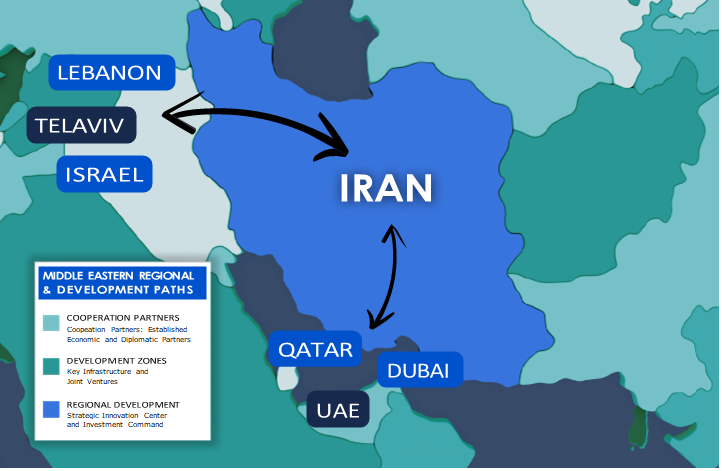
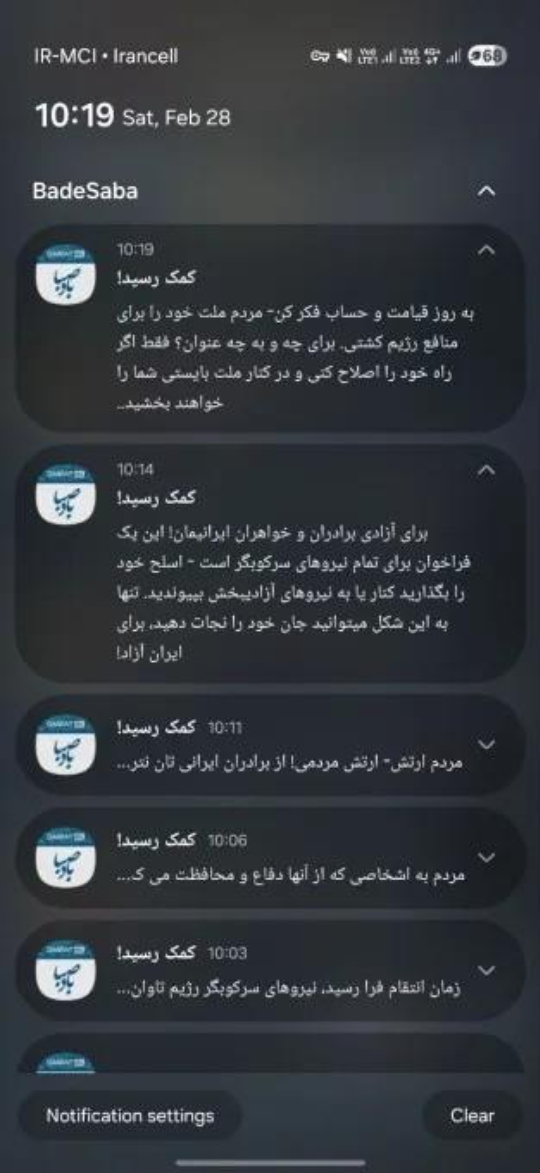
The cyber dimension was not a supporting element — it was a leading one. US Cyber Command was designated as the first mover, with cyber operations beginning before any kinetic weapons were deployed. What followed was described by Israeli sources as the largest cyberattack in history, collapsing Iran's internet connectivity through multi-layered attacks on BGP routing, DNS infrastructure, and SCADA/ICS systems. IRGC-linked news outlet Tasnim was hacked to broadcast anti Khamenei messaging. IRNA, Iran's state news agency, was taken offline. The BadeSaba Calendar prayer app — with over 5 million downloads — was compromised to send messages urging Iranian military personnel to defect. Iran's retaliation was named Operation True Promise IV and involved missile and drone strikes across the Gulf, targeting US military bases in Kuwait, Qatar, Bahrain, Jordan, Saudi Arabia, and the UAE.
COMPARATIVE CONTEXT: CYBER CONFLICT ESCALATION PATTERNS
To understand the scale and character of cyber activity in the current conflict, it is useful to compare it against recent geopolitical flashpoints, particularly the India-Pakistan escalation of May 2025 and the Israel-Hamas 12-Day War of June 2025.
India-Pakistan — Operation Sindoor (May 2025)
Following India's Operation Sindoor strikes on May 7, 2025, triggered by the April 22 Pahalgam terrorist attack, the India-Pakistan cyber escalation generated over 1.5 million claimed cyberattack attempts against Indian infrastructure within days. Cyberattacks on India rose by approximately 500% and on Pakistan by 700% compared to baseline levels. The overall volume of malicious cyber activity nearly doubled compared to the same period in 2024.
Critically, 95% of those attacks had no real-world impact. Most claimed breaches were exaggerated or recycled old data. DDoS attacks peaked at up to seven attacks per hour on May 7 alone, then cooled significantly within days of a ceasefire taking effect on May 10. The key actors were low-sophistication hacktivist groups, with more serious threats coming from APT36 using Crimson RAT malware for espionage against Indian defense networks. Many of those same hacktivist groups — including SYLHET GANG-SG, RipperSec, and DieNet — are now active in the current Iran conflict.
Israel-Hamas 12-Day War (June 2025)
The June 2025 escalation following Operation Rising Lion generated over 600 distinct cyberattack claims across more than 100 Telegram channels in just 15 days. Daily claims peaked at over 80 in a single day, immediately following major kinetic strikes — demonstrating the consistent behavioral pattern where hacktivist activity spikes in direct response to battlefield events. Industry monitoring recorded a ~700% spike in cyberattacks against Israel during that conflict. Israel accounted for over 70% of all hacktivist claims, with the United States, Jordan, Saudi Arabia, and the UAE as secondary targets.
The Current Conflict: A New Threshold
|
Metric |
India–Pakistan (May 2025) |
Israel 12-Day War (June 2025) |
Current Conflict (Feb–Mar 2026) |
|
Hacktivist Groups Active |
~30 groups |
~100+ groups |
72+ groups (Day 5), growing |
|
Attack Claims (Peak Period) |
100+ in 3 weeks |
600+ in 15 days |
150+ in 7 days |
|
Daily Peak Claims |
7 attacks/hr on May 7 |
80+ in single day |
Active around the clock |
|
Primary Attack Type |
DDoS, Defacement |
DDoS, Data Leaks |
DDoS, OT Claims, Data Leaks |
|
OT/ICS Claims |
Very rare |
Isolated claims |
Multiple claims within 96 hours |
|
Confirmed Major Data Leaks |
Limited |
Several |
4.69M Israeli records (confirmed) |
|
Internet Blockout Impact |
None |
None |
Iran at 1–4% → reshapes APT activity |
|
APT Activity |
APT36 (Crimson RAT) |
MuddyWater, Charming Kitten |
Suppressed inside Iran; active externally |
The current conflict has reached OT/ICS claim thresholds within the first four days — a pace that took weeks in previous escalations. The structural difference is the internet blackout itself, which both eliminates the most sophisticated state-level threat in the short term and forces hacktivist activity to operate as the primary visible front.
THE IRAN INTERNET BLACKOUT: RESHAPING THE CYBER BATTLEFIELD
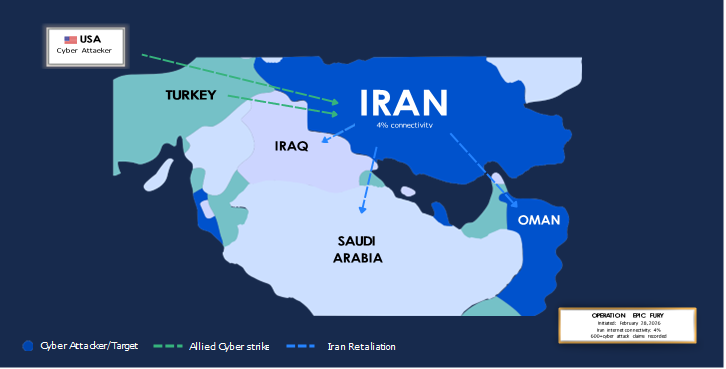
The near total collapse of Iranian internet connectivity on February 28, 2026, is the defining variable of the current cyber conflict. What began as a combination of allied offensive cyber operations and regime-imposed shutdown — consistent with Iran's documented use of internet kills during civil unrest — has resulted in a cyber environment that is unlike anything observed in prior conflicts.
Pre-War Context: The January 2026 Blackout
The internet blackout that accompanied the conflict did not emerge from nowhere. Iran had already imposed a near-total national internet shutdown in January 2026 during large-scale street protests, and the Iranian Minister of Communications acknowledged at the time that the shutdown was costing the economy $35.7 million per day. Iran's government had been accelerating development of an internet kill-switch project in coordination with Huawei and China, intended to cut the nation off from the global internet for extended periods. Online sales fell 80% and the Tehran Stock Exchange lost 450,000 index points during the January blackout. Iranian authorities attempted to deflect blame by citing power outages and aging equipment. By February 2026, an estimated 400,000 Iranians abroad were using Psiphon circumvention tools, and the US had covertly smuggled thousands of Starlink terminals into Iran for access.
February 28 and the Dual Blackout
When Operation Epic Fury commenced, Iran's internet dropped to between 1% and 4% of normal levels within hours. Attribution remains contested — this reflects both the regime's own internet controls and external allied cyberattacks. Independent internet monitoring indicated the blackout was largely consistent with a regime-imposed shutdown, while cybersecurity analysts noted that the BGP routing and DNS infrastructure disruptions were consistent with external offensive operations. The practical result was the same: Iran went dark precisely when its leadership needed communications most.
Iran's National Information Network — the domestic intranet designed to function independently of the global internet — was also reported to have been fully disconnected, suggesting the external attacks penetrated deeper than a surface-level BGP disruption. The Iranian government's own emergency whitelisting system, which allows internet access for loyalist groups, was the only remnant of connectivity visible to external monitoring.
Effect on APT Operations
Loss of connectivity, combined with significant degradation of Iranian leadership and command structures, will likely hinder the ability of state-aligned threat actors to coordinate and execute sophisticated cyberattacks in the near term. Iranian cyber cells operating from inside Iran may now be functioning in isolation, potentially deviating from established operational patterns. The people who normally run these keyboards are taking shelter from air strike.
The key exception is geographically dispersed operators. Some Iranian threat actors have reportedly leveraged Starlink satellite internet to sustain operational connectivity despite the national blackout. Iran-aligned APT operators outside Iran — particularly in Southeast Asia, Pakistan, and the broader Middle East — retain their command-and-control infrastructure and have continued to claim retaliatory operations. This creates a fragmented landscape where the most sophisticated threats are temporarily quieted at the source while proxy and diaspora operations continue.
Despite the severe internet disruption within Iran, intelligence sources indicate that several Iranian state-linked APT groups remained operational during the conflict period, including MuddyWater, APT34 (OilRig), APT33, and APT39 (Chafer). These groups primarily targeted diplomatic institutions, financial organizations, maritime infrastructure, and telecommunications networks across the Middle East. Their operations relied on stealthy persistence techniques and espionage rather than overt disruptive attacks, distinguishing them from the more visible hacktivist campaigns.
Effect on Hacktivist Activity
Paradoxically, the blackout that suppressed state-level APT coordination has accelerated hacktivist mobilization. With visible state cyber operations largely absent from the public information space, the hacktivist ecosystem — operating via Telegram channels based outside Iran — has expanded rapidly to fill that void. From 35 active groups tracked on February 28 to over 72 by March 2, the hacktivist landscape doubled in under 96 hours. The void left by suppressed APT activity has given hacktivist groups an elevated signal-to-noise profile, making claims of OT intrusion and critical infrastructure access louder and more narratively prominent than they would otherwise be.
CONFLICT TIMELINE: CYBER EVENTS
February 25, 2026 (Pre-War)
-
Iran's Nobitex cryptocurrency exchange — the country's largest — reportedly drained of approximately $90 million via structured transactions by pro-Israel hackers. Attack later confirmed via open-source reporting.
-
Handala Hack enters operational silence mode, a pattern historically consistent with active campaign preparation rather than dormancy.
February 28, 2026 — Day 1
-
Operation Epic Fury and Operation Roaring Lion launched at approximately 7:00 AM Tehran time. US Cyber Command confirmed as first mover — cyber operations precede kinetic strikes.
-
Iran's internet connectivity collapses to 1-4% of normal levels. State news agency IRNA taken offline. IRGC-linked Tasnim outlet hacked to display anti-Khamenei messages.
-
BadeSaba Calendar prayer app (5M+ downloads) compromised to send military defection messages.
-
Iranian state TV allegedly hacked to broadcast Trump and Netanyahu speeches.
-
Saba Wind prayer time app reported hacked across multiple cities to display messages including 'Help has arrived' and 'Do not fear, defend them.'
-
Cyber Islamic Resistance announces formation of a joint Electronic Operations Room and launches general cyber mobilization. RipperSec and Cyb3rDrag0nzz formally join the operations room.
-
Security telemetry observed immediate activity consistent with Iranian-aligned hacktivist groups conducting reconnaissance and initiating DDoS attacks.
March 1, 2026 — Day 2
-
313 Team (Islamic Cyber Resistance in Iraq) claims DDoS against Jordanian government portal (jordan.gov.jo), reporting a one-hour complete shutdown.
-
313 Team expands declared target list to Jordan, Saudi Arabia, UAE, Kuwait, Israel, and the United States.
-
Nation of Saviors claims 21GB data breach of Saudi engineering firm Baran Company.
-
Moroccan Black Cyber Army claims DDoS against TCS Communications in Tel Aviv.
-
DieNet expands DDoS operations to Jordan and Saudi banking sectors, targeting Jordan Kuwait Bank, Jordan Commercial Bank, and Bank of Jordan.
-
DieNet explicitly frames Cyprus as a legitimate target due to British military bases, predating public reporting of any UK operational involvement.
-
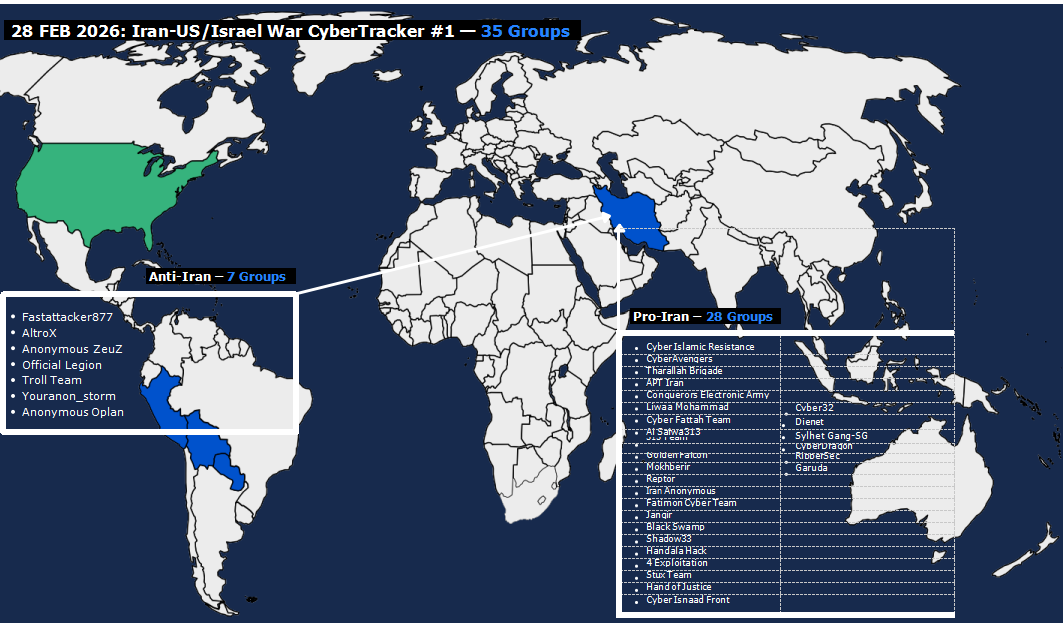
CyberTracker #1 released: 35 active groups — 7 anti-Iran, 28 pro-Iran.
-
Amazon Web Services confirms its UAE data center disrupted by physical strikes ('objects striking the data center creating sparks and fire') — first confirmed kinetic attack on hyperscale cloud infrastructure during active conflict.
March 2, 2026 — Day 3
-
Cyber Islamic Resistance and affiliated channels share imagery claiming access to industrial control environments including PLC controller interfaces and energy monitoring dashboards — shift from website DDoS to OT claims.
-
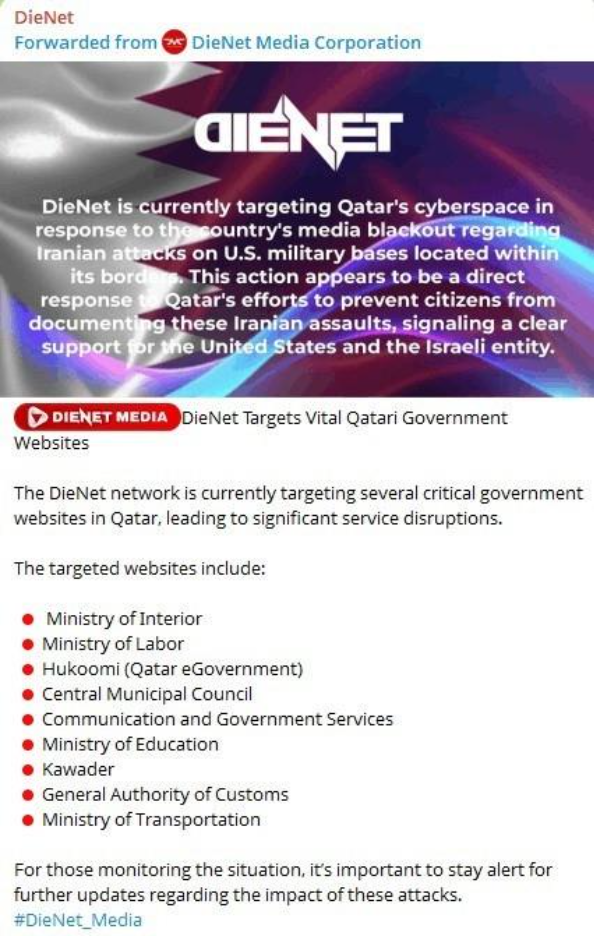
APT Iran claims infiltration of Jordan's critical infrastructure with over one month of prior access, alleging manipulation of power plant control systems and a 75% reduction in electricity output. DieNet publishes structured targeting list covering government, airport, financial, telecom, and utility targets across Qatar, Bahrain, UAE, Kuwait, and Saudi Arabia.
-
-
INC Ransomware lists Israeli industrial firm ramet-trom.co.il on its leak site, claiming approximately 1 terabyte of exfiltrated data including blueprints and contracts. The listing is explicitly framed as political rather than financial.
-
Anonghost publishes file claiming US IP range scanning across 72.x.x.x address blocks.
-
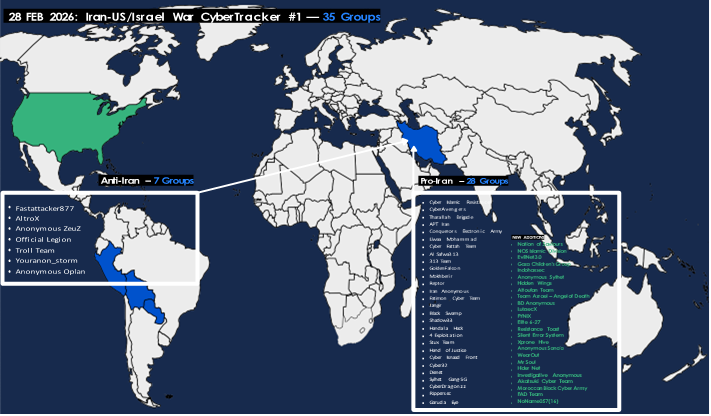
CyberTracker #2 released: 60 active groups — still 7 anti-Iran (Anti-Iran side unchanged), 53 pro-Iran.
-
A threat intelligence briefing identified 12 newly active hacktivist entities.
-
Major data leak confirmed: 4.69 million Israeli citizens' personal data leaked by actor 'bzaari' on LeakBase, including phone numbers, emails, names, DOB, and location data.
March 3, 2026 — Day 4
-
NoName057(16) claims DDoS against Jerusalem Post and Israeli ISP, framing successful mitigation as the defender 'hiding' rather than blocking — a rhetorical normalization tactic.
-
Keymous declares Kuwait, Jordan, and Saudi Arabia as daily declared visit targets under themed campaign branding.
-
DarkStorm Team moves against Israeli banking institutions in coordinated DDoS campaign.
-
Z-Pentest Alliance (pro-Russian) publishes claim of full access to Israeli water pump control and supply management HMI, showing Hebrew-language controls for pressure, flow rate, and pump hours.
-
IRGC-affiliated Telegram channel with 526,000 subscribers claims penetration of 160 Israeli data centers — no technical evidence provided.
-
AWS Middle East (Bahrain) Region also disrupted by a localized power issue caused by physical attacks.
March 4, 2026 — Day 5
-
APT Iran Telegram channel alleges deep intrusion into Jordan Silos Company (state-linked grain storage), describing phishing-enabled access approximately one month prior, followed by temperature manipulation in northern silos, weighing software modification to underreport weight by 10%, and disabling of solar inverters.
-
Z-Pentest Alliance publishes HMI screenshot of Israeli water infrastructure with claimed ability to switch equipment on/off and trigger emergency processes.
-
Conquerors Electronic Army claims five separate attacks against Israeli targets in 12 hours under 'Wa'd al-Akhira' operational banner — sectors including civil emergency alerting, financial services, media, industrial, and healthcare.
-
CISA releases ICS advisories for Yokogawa CENTUM VP (ICSA-26-057-09) and Johnson Controls Frick Controls (ICSA-26-057-01).
-
Pioneer Kitten observed actively exploiting Ivanti Connect Secure (CVE-2024-21887) and Citrix
-
ADC/NetScaler (CVE-2023-3519).
-
UK NCSC issues advisory urging all UK organizations to review and strengthen their cyber security posture in response to the evolving Middle East conflict.
March 5-6, 2026 — Days 6-7
-
Three newly identified malware families — GhostFetch, CHAR, and HTTP_VIP — confirmed deployed since late January in campaigns targeting MENA organizations including government, financial services, energy, utilities, and insurance. Assessed as AI-assisted malware.
-
Operation Olalampo (MuddyWater) confirmed targeting META (Middle East, Turkey, Africa) region, with TTPs overlapping RedKitten campaign from January 2026.
-
Iranian threat actors confirmed using Starlink satellite internet to maintain C2 infrastructure despite national blackout.
-
Handala claims breach of Saudi Aramco facilities and the Institute for National Security Studies (INSS) in Israel.
-
Trump administration revises operational outlook to 4-5 weeks, extending anticipated Iranian cyber retaliation window to approximately mid-April 2026.
UAE scammers exploiting conflict environment, impersonating Ministry of Interior to harvest Emirates ID numbers from civilians
Additional threat intelligence indicates that cyber activity surrounding the conflict rapidly expanded beyond the direct combatants. Between 18 January and 4 March 2026, more than 1,107 cyber incidents were recorded across Middle Eastern states. Israel accounted for 35.4% of all incidents (392 attacks), making it the most heavily targeted nation in the region. Other heavily targeted states included Saudi Arabia (100 incidents), Kuwait (59), Jordan (32), Qatar (24), and Bahrain (17). These attacks primarily consisted of coordinated DDoS campaigns against banking and government infrastructure, mass website defacements, and multiple data breach claims circulated through Telegram channels and dark-web forums.Multiple data breach claims emerged during the conflict period. Threat actors alleged the compromise of Israeli military databases, including officer lists and operational documents posted on dark-web forums. Additional breach claims targeted Gulf organizations, including a 21GB data leak from Baran Company Limited in Saudi Arabia and the exposure of thousands of reservation records and financial accounts.
Although some claims remain unverified, they reflect the information warfare dimension of the cyber conflict, where data leaks are used to amplify psychological and political impact.
HACKTIVIST LANDSCAPE
The hacktivist dimension of this conflict has been its most immediately visible and publicly documented front. Unlike APT operations — which are characterized by persistence, patience, and operational security — hacktivist campaigns are designed for noise, narrative impact, and recruitment amplification. Telegram is the primary coordination, publication, and amplification platform. Claims are announced publicly within minutes of alleged operations.
-
Pro-Iran / Anti-US-Israel Hacktivists
The pro-Iran hacktivist ecosystem is not a monolith. It comprises Iranian-directed proxies, ideologically aligned regional collectives, Southeast Asian groups with established anti-Israel orientations, and now pro-Russian collectives that have joined the campaign as a secondary theater alongside their Ukraine operations. These groups vary enormously in capability and operate largely through opportunistic coordination rather than centralized command.
Cyber Islamic Resistance — The Electronic Operations Room
The most significant organizational development of this conflict is the formation of a joint Electronic Operations Room announced by Cyber Islamic Resistance on February 28, 2026. The group publicly called for cyber warfare participants and formalized the integration of multiple previously independent hacktivist teams under a single umbrella brand. Teams including RipperSec, Cyb3rDrag0nzz, and others formally declared their integration. This represents a structural shift from the independent group model that characterized the June 2025 12-Day War toward a more coordinated collective — though actual coordination depth remains shallow. Cyber Islamic Resistance has claimed access to PLC controller interfaces and energy monitoring dashboards, though independent verification is pending.
DieNet — The Arsenal Provider
DieNet occupies a unique structural role in this ecosystem. It provides DDoS tooling used by smaller hacktivist groups, essentially democratizing high-volume attack capability across the network of aligned collectives. DieNet's operations have expanded consistently across the conflict — initially targeting Kuwait and Israel, then expanding to Jordan banking, Saudi financial infrastructure, and Gulf aviation systems.
DieNet also published a structured target list covering Qatar, Bahrain, UAE, Kuwait, and Saudi Arabia, spanning government, airports, banks, and utilities. The group explicitly named Cyprus as a target due to British military bases — a narrative that preceded public reporting of UK involvement and suggests intelligence sharing within the pro-Iran actor network.
Handala — MOIS-Linked Hybrid Operator
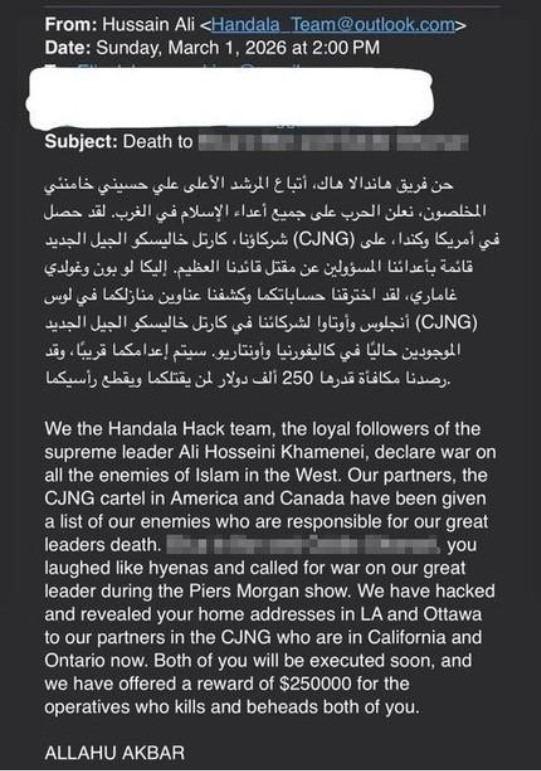
Handala is linked to Iran's Ministry of Intelligence and Security (MOIS) and is overlapping with the Void Manticore cluster. Handala occupies the space between state-level APT and hacktivist — it blends data exfiltration with disruptive operations and explicit targeting of Israeli political figures and defense entities. During this conflict, Handala claimed to have compromised Israel Opportunity Energy, an oil and gas firm. It also claimed breach of Saudi Aramco facilities and the Institute for National Security Studies. Most significantly, Handala issued direct death threats and doxxing of Iranian-American and Iranian-Canadian influencers, including claimed disclosure of home addresses to physical operatives — an escalation beyond cyber into hybrid physical-digital intimidation. Handala's operational silence pattern in January-February 2026 is consistent with active campaign preparation.
APT Iran — Hack-and-Leak with OT Claims
APT Iran is a pro-Iranian hacktivist collective that has become prominent for hack-and-leak operations and has escalated into OT-themed claims during this conflict. The group claims phishing-enabled access to Jordan Silos Company one month prior to public disclosure, with alleged manipulation of temperature controls in northern grain silos, weighing software, and solar power inverters. A solar PV monitoring dashboard was published alongside the claim. The level of narrative detail is sufficiently high to be either genuine or deliberately crafted for psychological effect — independent verification has not been confirmed. If any portion of the OT access claim is genuine, it represents a meaningful escalation beyond DDoS into operationally relevant critical infrastructure interference targeting food security infrastructure.
NoName057(16) — Pro-Russian Affiliate
NoName057(16) is a Russian-affiliated hacktivist collective that has consistently targeted Western and US- aligned nations since 2022. During the current conflict, the group has redirected significant capacity toward Israeli targets, framing this as solidarity with Iran. The group claimed DDoS disruption of the Jerusalem Post and an Israeli ISP, and its Telegram posts indicate an operational strategy of dividing attention between Europe and the Middle East. When NoName's attacks are blocked by DDoS mitigation services, the group frames this as the defender 'hiding' rather than a successful defense — a narrative tactic designed to maintain psychological momentum regardless of technical outcome.
Z-Pentest Alliance — OT Claims Against Israeli Water
Z-Pentest Alliance is a pro Russian group that published one of the most operationally significant claims of the conflict on March 3: alleged full access to a pump control and water supply management system in Israel, supported by a screenshot of an HMI panel showing Hebrew-language controls for water pressure, flow rate, supply meters, and pump operating hours. The group claims the ability to switch equipment on and off, change operational settings, and trigger emergency processes. Attribution to a specific Israeli operator has not been confirmed, and the claim may reflect access to a test or decommissioned system. Regardless of verification status, the targeting intent is explicit and aligns with a pattern of OT-focused claims across the ecosystem.
313 Team, Conquerors Electronic Army, Keymous
The 313 Team, operating under the Islamic Cyber Resistance in Iraq banner, was among the first to expand targeting from Israel to Gulf states, declaring attacks against Jordanian government portals and announcing a declared target list spanning Jordan, Saudi Arabia, UAE, and Kuwait. Conquerors Electronic Army conducted a multi-sector DDoS campaign on March 4 under the 'Wa'd al-Akhira' operational banner, hitting civil emergency alerting, financial services, media, industrial, and healthcare sectors across five separate attacks within 12 hours. Keymous operates a recurring declared target format, naming new countries daily and publishing check-host screenshots as proof of disruption.
Pro-Israel / Anti-Iran Hacktivists
The structural imbalance between pro-Iran and anti-Iran hacktivist groups is a persistent feature of this conflict type. As of March 2, 2026, 59-60 pro-Iran groups are active against 11 anti-Iran groups. The imbalance is not a reflection of capability — it reflects operational model. Israel's state-level offensive cyber capability makes independent hacktivist groups largely redundant on the Israeli side. Allied-side actors also avoid Telegram as a coordination platform, reducing their visibility in open-source monitoring.
-
Anonymous OpIran, AltroX, Official Legion, Troll Team, Anonymous Zeuz, Youranon_storm — All have declared operations against Iranian targets including IRNA News Agency, Sharif University of Technology (full database extraction claimed), and Iranian government portals.
-
404 CREW CYBER TEAM — Conducted reconnaissance scanning of Iranian undersea cable
-
infrastructure (IP 217.218.109.14), leaked CCTV surveillance access across multiple Iranian IPs, and defaced Golkar Trading.
-
ENTITY — Leaked passport details of exiled Iranian leader Reza Pahlavi and his spouse, framed as a psychological warfare operation targeting the opposition.
-
Indian Cyber Force — Pro-Israel group active since 2022, observed in current targeting of Iranian digital assets.
-
Predatory Sparrow — Israeli intelligence-linked group that has previously struck Iranian steel and fuel infrastructure in past escalations. Expected to be active in current conflict though operating with less Telegram visibility by design.
|
Group |
Alignment |
Primary Tactics |
Notable Actions |
|
Cyber Islamic Resistance |
Pro–Iran |
DDoS, OT claims, recruitment |
Electronic Operations Room operator |
|
DieNet |
Pro–Iran |
DDoS tooling, Gulf targeting |
Arsenal provider across 20+ Gulf targets |
|
Handala Hack |
Pro–Iran (MOIS–linked) |
Exfil, ransomware, doxxing |
Death threats to influencers; Aramco claim |
|
APT Iran |
Pro–Iran |
Hack-and-leak, OT claims |
Jordan Silos grain storage OT claim |
|
NoName057(16) |
Pro–Russia/Iran |
DDoS, media targeting |
Jerusalem Post, ISP disruption |
|
Z-Pentest Alliance |
Pro–Russia/Iran |
OT access claims |
Israeli water system HMI screenshot |
|
313 Team |
Pro–Iran (Iraq) |
DDoS, government portals |
Jordan gov portal; Gulf target declarations |
|
Conquerors Electronic Army |
Pro–Iran |
Multi-sector DDoS |
Civil alert, healthcare, finance in single day |
|
Keymous |
Pro–Iran |
DDoS, daily targeting |
Kuwait, Jordan, Saudi Arabia campaigns |
|
Anonymous OpIran |
Anti–Iran |
DDoS, data breach |
IRNA, ISNA, Sharif University breach |
|
404 CREW CYBER TEAM |
Anti–Iran |
Recon, CCTV access, defacement |
Iranian undersea cable scanning |
|
ENTITY |
Anti–Iran |
Doxxing, psychological ops |
Reza Pahlavi passport leak |
APT GROUP LANDSCAPE
Iran's nation-state cyber apparatus is among the world's most prolific and tactically diverse. Over the past decade, Tehran has institutionalized offensive cyber through units linked to the IRGC and the Ministry of Intelligence and Security (MOIS). Iranian APTs operate across the full spectrum — from espionage and credential harvesting to destructive disk wipers, DNS hijacking, and OT intrusion. The current internet blackout has temporarily degraded their ability to operate from within Iran, but the operational posture built over years ensures that geographically dispersed operators and external infrastructure remain active.
Key Iranian APT Groups: Current Status and Capabilities
MuddyWater (Static Kitten / Mercury / Mango Sandstorm)
MuddyWater is an IRGC-linked group known for targeting government, transport, and industrial sectors across the Middle East and beyond. The group leverages phishing with PowerShell loaders, abuses legitimate Remote Management and Monitoring (RMM) tools for persistence, and uses DLL side-loading via its PowGoop component. In February 2026, MuddyWater was confirmed to be conducting Operation Olalampo — a structured cyber offensive operation targeting the META (Middle East, Turkey, Africa) region. TTPs in this operation overlap with the RedKitten campaign from January 2026, indicating coordinated infrastructure. Threat researchers confirmed MuddyWater is establishing forward cyber posture aligned with the current kinetic conflict. MuddyWater's new MuddyViper backdoor targeting Israeli and Egyptian critical infrastructure was discovered December 2025.
APT34 / OilRig (Helix Kitten / Hazel Sandstorm)
APT34 is one of the most technically sophisticated Iranian APT groups, specializing in credential harvesting, DNS hijacking, and long-term regional espionage targeting Middle East government, telecom, and financial sectors. The group's hallmark is DNS tunneling for C2 and high-entropy subdomain generation that is detectable in DNS query logs. APT34 is assessed to be active in the current environment, though direct attribution of specific incidents to the current conflict cycle requires additional technical confirmation. Its long-term access operations against Gulf state governments mean pre-positioned access may already exist in target environments.
APT35 / APT42 (Charming Kitten / Phosphorus / Mint Sandstorm / TA453)
APT35 and APT42 are IRGC-linked groups that have expanded their scope in recent years to heavily target civil society — journalists, NGOs, academics, think tanks, and policy experts. APT42's January 2026 RedKitten campaign targeted human rights NGOs with macro-laced Office documents disguised as records of protesters killed during the January 2026 crackdown in Iran, using GitHub, Google Drive, and Telegram bots for C2. The group's operational pattern post-Operation Epic Fury would logically include expanding this targeting to organizations reporting on or engaged with the current conflict. APT42 operates almost entirely within cloud environments post-compromise — bulk email forwarding rules and OAuth grants to unrecognized third-party applications are primary behavioral indicators.
APT33 (Elfin / Refined Kitten / Magnallium)
APT33 is the preeminent Iranian threat against aerospace and energy sectors, with a documented history of destructive wiper deployment. The group's Shamoon and ZeroCleare wipers remain in its arsenal, and the current conflict provides clear motivation to activate destructive capabilities against US and Gulf state energy infrastructure. The kinetic strikes against Saudi Aramco's Ras Tanura facility in the current conflict and the targeting of QatarEnergy LNG suggest that critical energy infrastructure is being struck kinetically and may be targeted cyber-physically in parallel. APT33's alignment with energy sector targeting makes it a priority concern for Saudi Aramco, QatarEnergy, and Gulf state utilities.
CyberAv3ngers (IRGC-affiliated)
CyberAv3ngers is the most OT-focused Iranian threat actor, specifically targeting water utilities, ICS/OT systems, and exposed industrial control environments. The group's IOCONTROL malware is purpose-built for OT and IoT infrastructure targeting US and Israeli water utilities and fuel management systems. CISA has issued an advisory and a Rewards for Justice offer of up to $10 million for attribution information remains active. IOCONTROL was confirmed updated as recently as March 1, 2026 — active maintenance during an active conflict. The hacktivist OT claims (APT Iran's grain silo claim, Z-Pentest Alliance's water HMI claim) share targeting logic with CyberAv3ngers' established doctrine.
Fox Kitten / Pioneer Kitten
Fox Kitten specializes in exploiting unpatched VPN appliances and edge devices for initial access. Pioneer Kitten was observed in the 24 hours preceding this report actively exploiting Ivanti Connect Secure (CVE- 2024-21887) and Citrix ADC/NetScaler (CVE-2023-3519) — both vulnerabilities with known Iranian exploitation history. Organizations that have not patched these systems are at active risk of compromise by Pioneer Kitten serving as initial access broker for downstream Iranian APT operations.
|
Malware Family |
Type |
Attributed To |
Target Sectors |
Notable Characteristic |
|
MuddyViper |
Backdoor |
MuddyWater |
Israeli, Egyptian critical infra |
ESET-identified Dec 2025 |
|
RustyWater |
RAT (Rust-based) |
MuddyWater |
Multi-sector |
Anti-debugging, anti-tampering mechanisms |
|
WezRAT |
Infostealer (modular) |
Cotton Sandstorm |
Israeli organizations |
Impersonates Israeli INCD; keylogging, screenshot, browser cookie theft |
|
GhostFetch |
Unknown |
Unknown (AI-assisted) |
MENA: Gov, finance, energy |
Identified late Jan 2026; AI-assisted development |
|
CHAR |
Unknown |
Unknown (AI-assisted) |
MENA: Gov, utilities, education |
Part of same campaign cluster as GhostFetch |
|
HTTP_VIP |
Unknown |
Unknown (AI-assisted) |
MENA: Insurance, finance |
LLM-likely used for obfuscation |
|
IOCONTROL |
OT/ICS malware |
CyberAv3ngers (IRGC) |
Water utilities, fuel management |
Updated March 1, 2026; CISA advisory active |
Allied Offensive Cyber Operations
The US-Israel offensive cyber operations on February 28 represent the most sophisticated allied cyber campaign ever disclosed. US Cyber Command served as first mover, beginning operations before any kinetic weapon was deployed. The combination of BGP routing disruption, DNS infrastructure attacks, SCADA/ICS system targeting, and app-level compromise of widely-used civilian applications represents a full-spectrum offensive that deliberately targeted Iran's communications capacity, leadership coordination, and public psychological cohesion simultaneously. Predatory Sparrow — the Israeli intelligence-linked group that previously struck Iranian steel and fuel infrastructure — is presumed active in current operations, though the group's operational security model means its activity does not surface in Telegram-based OSINT.
Third-Party Nation-State Opportunism: Camaro Dragon (China-Linked APT)
Operation Epic Fury has created a strategic intelligence windfall for actors beyond the direct belligerents. External Threat Research identified a rapid-onset cyber espionage campaign launched by Camaro Dragon— a China-linked advanced persistent threat group — within a single day of the military escalation. This timeline is not coincidental. It reflects a well-resourced intelligence operation that maintains continuous monitoring of geopolitical developments and pre-positions campaign infrastructure capable of near- immediate deployment.The campaign targeted organizations in Qatar — a deliberate choice. Qatar sits at the intersection of US military basing (Al Udeid Air Base, the largest US military installation in the Middle East), LNG energy diplomacy, and regional mediation. For a state actor conducting long-range strategic intelligence collection, Qatar's communications, policy deliberations, and energy infrastructure represent exceptionally high-value collection targets — especially during an active regional crisis when diplomatic channels are at maximum activity.
Attack Chain and Malware
The infection chain began with conflict-themed archive files distributed across Qatari organisational networks. The lure file was titled: 'The destruction caused by an Iranian missile strike around the US base in Bahrain' — a realistic conflict-era document title that would be entirely plausible as an intelligence briefing or news summary during the first days of Operation Epic Fury. The archive contained an LNK shortcut file which, on execution, contacted a compromised remote server to download the first-stage payload. This staged delivery approach — in which the initial file appears benign and the malicious payload is retrieved remotely — is specifically designed to evade email security gateways and static file scanning.The full infection chain deployed two primary tools. PlugX is a modular remote access backdoor with a decade-long history across Chinese state-linked espionage operations. It provides persistent remote access, file system enumeration, keylogging, and data exfiltration — capabilities well-suited to long-term intelligence collection from within government, diplomatic, or energy sector networks. Cobalt Strike was additionally deployed as a post-exploitation framework for internal reconnaissance, lateral movement mapping, and identification of high-value systems for deeper compromise.A technically notable element of the campaign was the abuse of Baidu NetDisk — a Chinese cloud storage application — through DLL hijacking. The attackers placed a malicious DLL alongside the legitimate Baidu NetDisk executable, causing the trusted application to load the malicious library on launch. Because the process is initiated by a legitimate, signed application, many endpoint detection systems attribute theactivity to trusted software rather than flagging it as malicious. This technique allowed Camaro Dragon to inject the PlugX backdoor into the system in a manner that blends with normal application behaviour.
Strategic Assessment: China's Third-Party Exploitation Posture
The framing of this conflict as a bilateral US-Israel versus Iran cyber campaign requires revision. Camaro Dragon's rapid activation confirms that at least one third-party nation-state is actively exploiting the conflict to conduct parallel intelligence collection operations under cover of regional chaos. The strategic logic is sound: during an active military escalation, defensive attention is concentrated on the primary threat actors (Iranian APTs, hacktivist groups), network traffic volumes increase dramatically, and organisations deprioritise routine threat hunting in favour of operational continuity. This creates precisely the conditions under which a patient espionage actor can establish persistent access with reduced risk of detection.China's intelligence collection priorities in the Gulf region include US military posture and logistics, LNG pricing negotiations and supply chain decisions, diplomatic communication between Gulf states and Western capitals, and the broader regional realignment being forced by the conflict's outcome. Camaro Dragon's Qatar-centric targeting aligns directly with all four priorities. The timing — within 24 hours of the first kinetic strikes — indicates this was not an opportunistic campaign assembled after the fact, but a pre-planned contingency operation activated on a trigger event.
REGIONAL IMPACT: MIDDLE EAST NATION-BY-NATION ASSESSMENT
Kuwait — Most Heavily Targeted Gulf State
Kuwait has been the most heavily targeted Gulf state in this conflict, subject to a coordinated DDoS campaign targeting national aviation, financial institutions, and core government digital infrastructure simultaneously. DieNet confirmed DDoS against Gulf Bank, Kuwait Finance House, Al Ahli Bank of Kuwait,
Weyay Bank, and the Kuwait Government Online Portal. The 313 Team attacked the Kuwait Armed Forces portal and the state e-portal, with both attacks confirmed by check-host evidence. Fatimion Cyber Team declared large-scale targeting of all Kuwaiti government websites. Over 10 confirmed disruption incidents against critical state entities have been recorded.
Jordan — Escalating Threat, OT Escalation
Jordan faces a multi-vector threat with nationwide threat declarations referencing airports, railways, banks, transport, and water supply systems. DieNet expanded to Jordan with confirmed DDoS against Jordan Kuwait Bank, Jordan Commercial Bank, and Bank of Jordan. The 313 Team reported a complete one- hour shutdown of the Jordanian e-government portal. The most significant development for Jordan is the APT Iran claim of unauthorized access to Jordan Silos Company, a state-linked grain storage entity. If any portion of that OT access claim is genuine — and the level of operational detail (phishing access one month prior, temperature manipulation, weighing software modification, solar inverter disabling) makes it worth serious investigation — it would represent a direct threat to Jordan's food security infrastructure. The University of Jordan Library also confirmed a cyberattack as a victim-confirmed incident.
Saudi Arabia — Newly Elevated Target
Saudi Arabia emerged as a new priority target within the first 72 hours, driven by its political alignment with the US and the Saudi government's permission for American use of Saudi bases — a trigger explicitly cited in the SYLHET GANG-SG hack claim against the Saudi Ministry of Home Affairs. DieNet confirmed DDoS against Riyad Bank and Al Rajhi Bank. Evil Markhors added additional DDoS targeting. Nation of Saviors claimed a 21GB breach of Saudi engineering firm Baran Company. Handala claimed breach of Saudi Aramco facilities. Multiple groups under #OpSaudi and #OpGCC banners have declared ongoing operations. The convergence of financial sector DDoS, data breach claims, and physical infrastructure (kinetic drone strikes on Ras Tanura) makes Saudi Arabia a high-priority concern across both digital and physical threat vectors.
UAE — Physical and Digital Convergence
The UAE is experiencing a unique intersection of kinetic and cyber threats. Amazon Web Services confirmed its UAE Middle East (ME-CENTRAL-1) data center was physically struck by drone strikes, causing extensive cloud service outages affecting dozens of services. A separate localized power disruption also affected AWS Bahrain (ME-SOUTH-1). UAE-based scammers are exploiting the conflict environment to impersonate the Ministry of Interior and harvest Emirates ID numbers from civilians. The US Consulate in Dubai was struck by an Iranian drone attack. UAE organizations face compound risk from kinetic infrastructure damage, service disruption cascade, and social engineering exploitation of the crisis environment.
Qatar, Bahrain — US Base Proximity Risk
Both Qatar and Bahrain host major US military installations and have been struck kinetically by Iranian ballistic missiles — Al Udeid in Qatar and Ali Al Salem in Kuwait, plus a Shahed-136 drone at the US Naval Support Activity in Bahrain. DieNet's declared target lists include airport operational systems, banks, and utilities in both countries. A Shahed drone struck a radar installation at the 5th Fleet facility. Both countries must treat the current period as one of elevated combined kinetic and cyber risk.
Cyprus — Newly in the Conflict Perimeter
Cyprus was explicitly framed as a legitimate target by DieNet before any public reporting confirmed UK involvement in the conflict — a signal of intelligence sharing within the pro-Iran hacktivist network. The presence of British military bases is cited as the trigger. DieNet's targeting narrative for Cyprus circulated in hacktivist channels before a drone impact was confirmed. Cypriot government, aviation, and infrastructure assets should be treated as within the active operational geography.
INDUSTRY AND SECTOR TARGETING ANALYSIS
The targeting landscape of this conflict spans virtually every sector of critical infrastructure, with specific sectors facing elevated combined risk from both state-level APTs and hacktivist collectives. The targeting logic reflects both strategic objectives (disrupt, degrade, blind) and psychological warfare objectives (create domestic fear, erode public trust, amplify psychological impact of kinetic strikes).
|
Sector |
Primary Threat Actors |
Key Incidents |
|
Government & Public Administration |
All hacktivist clusters, APT34 |
Kuwait e-gov, Jordan e-gov, Saudi MOI all hit |
|
Energy & Oil Infrastructure |
APT33, CyberAv3ngers, Handala |
Aramco claim; QatarEnergy LNG struck kinetically; OT claims against Israeli energy co |
|
Financial Services |
DieNet, DarkStorm, NoName057(16), Hydra Kitten |
Gulf Bank, KFH, Riyad Bank, Al Rajhi Bank, Israeli banks; Nobitex $900M drain |
|
Water & Food Supply |
CyberAv3ngers, Z-Pentest, APT Iran |
Israeli water HMI claim; Jordan Silos OT claim |
|
Cloud / Data Center Infrastructure |
State actors (kinetic) |
AWS UAE ME-CENTRAL-1 physically struck; AWS Bahrain disrupted |
|
Telecommunications & ISPs |
APT34, APT39, DieNet, hacktivists |
ICS Tel Aviv claimed; Iranian undersea cable scanned |
|
Aviation & Airports |
DieNet, multiple |
Dubai, Abu Dhabi, Kuwait Airport in target lists; US base radars struck |
|
Defense Industrial Base |
Handala, NoName057(16), FADTEAM |
Elbit Systems claimed; WeLearn Israeli academic breach; 130+ Israeli remote control systems claimed |
|
Healthcare |
Conquerors EA, Handala |
Maccabi Health Services DDoS; civil alert system hit; Israeli hospital systems |
|
Media & Communications |
State actors, Handala |
IRNA, Tasnim hacked Day 1; i24 News claimed; IRIB broadcasting HQ struck kinetically |
|
NGOs, Civil Society, Academia |
APT42, APT35 |
Sharif University breach; human rights NGOs targeted in Jan 2026 RedKitten |
|
Maritime & Shipping |
State actors (kinetic) |
Strait of Hormuz closure; shadow fleet tanker struck by friendly fire; 150 ships stalled |
The targeting of civil emergency alerting systems by Conquerors Electronic Army is operationally significant beyond its immediate impact. Disrupting Israel's public alert system — which notifies civilians of incoming missile attacks — during a period of active Iranian missile launches represents a direct threat to civilian life in a way that most DDoS operations do not. This category of target, alongside OT claims against food storage and water supply, marks the most serious potential escalation beyond symbolic disruption.One of the most severe claims observed during the reporting period involved alleged industrial control system (ICS) access targeting Israeli infrastructure. Threat actors associated with the Russian-aligned Z- Alliance collective claimed access to water supply pump control systems and industrial production environments, including a flour manufacturing facility. While the claim remains unverified, it represents the highest-severity OT/ICS intrusion claim reported during the conflict period and highlights the risk of cyber operations escalating from digital disruption to physical infrastructure impact.
TRENDS AND ANALYTICAL ASSESSMENT
The OT Threshold Is Being Tested
The most significant trend of this conflict, from a threat analysis perspective, is the speed at which OT/ICS claims appeared. In previous conflicts, OT targeting claims emerged weeks into an escalation cycle — if at all. In the current conflict, claims of PLC access, grain silo temperature manipulation, water system HMI access, and energy production monitoring appeared within the first 96 hours. Whether these claims reflect genuine intrusions or deliberately crafted information operations, the intent to signal capability against physical infrastructure is deliberate and systematic.The normalization of OT-targeting rhetoric across pro-Iranian, pro-Palestinian, and pro-Russian actor clusters is itself an intelligence signal, regardless of claim verification. Organizations operating water, energy, food supply, and government infrastructure in Israel, Jordan, and the broader Gulf region should treat the current environment as an elevated risk period even if no individual claim has been independently verified.
Russian Alignment as a Force Multiplier
The explicit joining of pro-Russian collectives — NoName057(16), Z-Pentest Alliance, Russian Legion — to the pro-Iran campaign represents a structural expansion of the adversary ecosystem. These groups bring documented DDoS capability, OT access claim experience, and established Telegram audiences to a conflict they previously had no operational involvement in. NoName057(16) is dividing operations between Europe and the Middle East simultaneously, suggesting structured targeting priorities rather than spontaneous mobilization. This is a concerning development: it means allied-side organizations may face DDoS tooling and OT claim techniques developed and refined during the Ukraine conflict now redirected at Middle Eastern targets.
The Psychological Operations Dimension
Iran's documented pattern of overstating intrusions — turning a single compromised machine into a claimed facility-wide breach — is operating at scale in this conflict. The IRGC-affiliated Telegram channel claiming penetration of 160 Israeli data centers, the DDoS operation framed as 'complete control over all systems,' and the fabricated data leaks are all components of an information operation strategy designed to force public responses on the attacker's timeline. Organizations need internal protocols for responding to Telegram breach claims before they generate press coverage — Iran's information operations are specifically designed to exploit the gap between a claim and a reputation.
Data Exposure as a New Primary Weapon
The 4.69 million Israeli citizen data leak by actor 'bzaari' on LeakBase represents one of the largest regional data exposures in the current cycle. This aligns with a broader trend: pro-Iran groups are increasingly shifting from disruption-focused campaigns toward psychological operations and mass data exposure. The data fields exposed — phone numbers, emails, names, DOB, location, relationship status,work details — are precisely the fields needed for targeted doxxing, harassment campaigns, identity theft, and secondary social engineering. The parallel doxxing of Reza Pahlavi's passport details by ENTITY reinforces that targeted psychological warfare against individuals — not just organizations — is now a primary operational technique.
CISA at Reduced Capacity
With CISA operating at reduced staffing due to a DHS funding lapse, the defensive posture of US civilian infrastructure is structurally weaker at precisely the moment it faces elevated risk. The absence of a published National Cybersecurity Strategy from the Trump administration, combined with CISA's institutional weakening, creates an environment where critical infrastructure organizations must operate with less federal coordination and guidance than previous conflict periods provided.
Timeline Extension and Retaliatory Window
President Trump's revised 4-5 week operational outlook has extended the anticipated window for Iranian cyber retaliation from approximately three weeks to potentially mid-April 2026. The current suppression of APT activity from within Iran is a near-term condition — once connectivity recovers, Iranian state- sponsored groups will retool and return. The organizations compromised in the coming weeks will largely be those that treated the current period as one of reduced risk simply because the most sophisticated actors are temporarily quieted.
TTP Table by Actor
|
Tactic |
Technique ID |
Technique Name |
Actor(s) |
|
Initial Access |
T1566.001 |
Spearphishing Attachment |
APT33, APT34/OilRig, APT35/APT42, MuddyWater, Tortoiseshell |
|
Initial Access |
T1566.002 |
Spearphishing Link |
APT35/APT42, MuddyWater |
|
Initial Access |
T1190 |
Exploit Public-Facing Application |
Fox Kitten/Pioneer Kitten, MuddyWater |
|
Initial Access |
T1078 |
Valid Accounts (Compromised Credentials) |
MuddyWater, APT34, Fox Kitten |
|
Initial Access |
T1195.002 |
Supply Chain Compromise — Software Supply Chain |
MuddyWater |
|
Initial Access |
T1199 |
Trusted Relationship |
Fox Kitten |
|
Execution |
T1059.001 |
PowerShell |
MuddyWater, APT34/OilRig, APT33 |
|
Execution |
T1059.005 |
Visual Basic (Macro-based) |
APT35/APT42, APT34 |
|
Execution |
T1204.002 |
Malicious File (User Execution) |
MuddyWater |
|
Execution |
T1218 |
System Binary Proxy Execution (LOLBins: CMSTP, WMI) |
MuddyWater, APT34 |
|
Persistence |
T1219 |
Remote Access Software (RMM Tool Abuse) |
MuddyWater |
|
Persistence |
T1574.002 |
DLL Side Loading (PowGoop) |
MuddyWater |
|
Persistence |
T1547.001 |
Registry Run Keys / Startup Folder |
MuddyWater |
|
Persistence |
T1505.003 |
Web Shell |
APT34/OilRig, MuddyWater |
|
Privilege Escalation |
T1548 |
Abuse Elevation Control Mechanism (UAC Bypass) |
MuddyWater |
|
Privilege Escalation |
T1134 |
Access Token Manipulation |
APT33, APT34 |
|
Defense Evasion |
T1218 |
Signed Binary Proxy Execution (LOLBins) |
MuddyWater, APT34 |
|
Defense Evasion |
T1562.001 |
Disable or Modify Security Tools |
MuddyWater |
|
Defense Evasion |
T1027 |
Obfuscated Files or Information |
MuddyWater |
|
Defense Evasion |
T1070 |
Indicator Removal |
APT34, MuddyWater |
|
Credential Access |
T1056 |
Input Capture — Cloud Credential Harvesting |
APT35/APT42 |
|
Credential Access |
T1110.003 |
Password Spraying |
APT33 |
|
Credential Access |
T1003.001 |
LSASS Memory Dump |
MuddyWater, APT39 |
|
Credential Access |
T1558.003 |
Kerberoasting / AS-REP Roasting |
APT33, APT34 |
|
Credential Access |
T1539 |
Steal Web Session Cookies / Browser Credentials |
MuddyWater |
|
Credential Access |
T1111 |
MFA Token Interception |
APT35 |
|
Credential Access |
T1584.002 |
DNS Hijacking |
APT34/OilRig |
|
Discovery |
T1595 |
Active Scanning / Reconnaissance |
Multiple Hacktivist Groups |
|
Discovery |
T1110 |
Default Credential Abuse |
CyberAv3ngers, Multiple Actors |
|
Discovery |
T1046 |
Network Service Scanning |
Fox Kitten, Pioneer Kitten |
|
Lateral Movement |
T1021 |
Remote Services (RMM Tools) |
MuddyWater |
|
Lateral Movement |
T1550.001 |
Alternate Authentication Material |
APT42 |
|
Collection |
T1119 |
Automated Collection |
APT34 |
|
Collection |
T1114.002 |
Email Collection |
APT34 |
|
Collection |
T1213 |
Data from Information Repositories |
APT42 |
|
Collection |
T1113 |
Screen Capture |
MuddyWater |
|
Collection |
T1056.001 |
Keylogging |
MuddyWater |
|
Command & Control |
T1071.004 |
DNS Tunneling |
APT34/OilRig |
|
Command & Control |
T1102 |
Web Service C2 (GitHub, Google Drive, Telegram) |
APT42, MuddyWater |
|
Command & Control |
T1071.001 |
Application Layer Protocol (HTTP/HTTPS) |
MuddyWater |
|
Command & Control |
T1572 |
Protocol Tunneling |
APT34 |
|
Command & Control |
T1090.003 |
Multi-hop Proxy (TOR) |
APT33 |
|
Command & Control |
T1219 |
Remote Access Software (Persistent C2) |
MuddyWater |
|
Exfiltration |
T1567 |
Exfiltration Over Web Services |
APT42 |
|
Exfiltration |
T1048 |
Exfiltration Over Alternative Protocol (DNS) |
APT34 |
|
Exfiltration |
T1041 |
Exfiltration Over C2 Channel |
MuddyWater |
|
Impact |
T1485 |
Data Destruction / Disk Wipe |
APT33, APT34 |
|
Impact |
T1491.001 |
Defacement |
Hacktivist Groups |
|
Impact |
T1498 |
Network Denial of Service (DDoS) |
Multiple Hacktivist Groups |
|
Impact |
T1499 |
Endpoint Denial of Service |
Multiple Hacktivist Groups |
|
Impact |
T1561 |
Disk Wipe |
APT33 |
|
ICS Impact |
T0816 |
Device Restart / Shutdown |
CyberAv3ngers |
|
ICS Impact |
T0831 |
Manipulation of Control (PLC/HMI) |
CyberAv3ngers |
|
ICS Discovery |
T0840 |
ICS Discovery |
CyberAv3ngers, Fox Kitten |
|
ICS Initial Access |
T0866 |
ICS Initial Access |
CyberAv3ngers |
Indicators of Compromise
|
IOC Value |
Type |
Actor / Campaign |
|
78[.]38.30.71 |
IP Address |
Iran-linked APT — active conflict period |
|
193[.]151.151.218 |
IP Address |
Iran-linked APT — active conflict period |
|
151[.]245.110.39 |
IP Address |
Iran-linked APT — active conflict period |
|
162[.]0.230.185 |
IP Address |
MuddyWater — Operation Olalampo |
|
157[.]20.182.49 |
IP Address |
MuddyWater — FMAPP implant |
|
159[.]198.66.153 |
IP Address |
MuddyWater — RustyWater RAT |
|
159[.]198.68.25 |
IP Address |
MuddyWater — RustyWater supporting infrastructure |
|
161[.]35.228.250 |
IP Address |
MuddyWater — RustyWater supporting infrastructure |
|
Starlink IP ranges (64.x.x.x / AS14593) |
IP Range |
Handala / Void Manticore |
|
nomercys[.]it[.]com |
Domain |
MuddyWater — RustyWater RAT |
|
codefusiontech[.]org |
Domain |
MuddyWater — HTTP_VIP / Operation Olalampo |
|
stratioai[.]org |
Domain |
MuddyWater — RustyWater infrastructure |
|
bootcamptg[.]org |
Domain |
MuddyWater — RustyWater infrastructure |
|
hxxps[:]//www[.]shirideitch[.]com/wp-content/uploads/2022/06/RedAlert[.]apk |
URL |
Iranian-aligned — Fake RedAlert APK campaign |
|
hxxps[:]//api[.]rabackup[.]com/analytics/submit.php |
URL |
Iranian-aligned — Fake RedAlert APK campaign |
|
hxxps[:]//bit[.]ly/4tWJhQh |
URL |
Iranian-aligned — Fake RedAlert APK campaign |
|
f38a56b8dc0e8a581999621eef65ef497f0ac0d35e953bd94335926f00e9464f |
SHA-256 |
MuddyWater — RustyWater |
|
7523e53c979692f9eecff6ec760ac3df5b47f172114286e570b6bba3b2133f58 |
SHA-256 |
MuddyWater — RustyWater RAT |
|
02ccc4271362b92a59e6851ac6d5d2c07182064a602906d7166fe2867cc662a5 |
SHA-256 |
MuddyWater — Operation Olalampo |
|
83651b0589665b112687f0858bfe2832ca317ba75e700c91ac34025ee6578b72 |
SHA-256 |
Iranian-aligned — Fake RedAlert APK |
|
62ED16701A14CE26314F2436D9532FE606C15407 |
SHA-1 |
MuddyWater — Operation Olalampo |
CONCLUSION
Operation Epic Fury has opened a cyber conflict with no clear endpoint. The kinetic and digital fronts were simultaneous from the first hour, and the cyber campaign will outlast the military operations. Iranian APT groups do not stand down when strikes stop — they retool, rebuild, and return. The current internet blackout is a near-term suppression mechanism, not a structural defeat of Iran's cyber capabilities.The hacktivist ecosystem filling the visible void is real, loud, and growing. Most DDoS claims are exaggerated. Most data leak claims require forensic validation. But the OT-targeting claims appearing within 96 hours of the conflict's opening represent a threshold that organizations in food, water, and energy infrastructure cannot ignore simply because verification is pending. The intent is deliberate. The targeting logic is documented. The capability — however imperfectly characterized by current claims — is real. The organizations most likely to be compromised in the coming weeks are those that interpreted the suppression of visible APT activity as a signal of reduced risk, rather than as a temporary operational condition. The conflict is active. The threat actors are adapting. The defensive window is now.